
Executive summary
Changes in decision rights must be effectively managed and thoughtfully implemented. Every right that moves is held by someone today, and it moves when that person is brought to release it rather than when a document says they have. That is a change management problem wearing an organizational design costume, and it is why the work succeeds or fails on sequence rather than on the quality of the map.
Decision rights cannot be installed. They can only be conceded.
Every decision right assigned to someone is one taken from someone else, and that single fact explains why organizations that already know what their decision map should look like still fail to change it. The analytical work takes a few weeks. The rebuild takes two quarters. What the extra time buys is not analysis. It is the sequence of concessions that makes the map survive contact with the first hard decision.
I have rebuilt decision rights across a matrixed development organization. Nine standing forums sat around the core program teams, every one created to solve a real problem, and not one had ever been asked which decisions it owned exclusively. The finding that surprised the leadership team was that governance was abundant rather than missing.
This paper sets out the method, the change mechanism underneath it, the case for compressing it into three weeks and the conditions under which that is the correct choice, and the two failure modes that appear afterward.
Examples are drawn from prior engagements and are described by organizational scale only. No organization, program, partner or individual is identified, and no revenue figures, confidential parameters or specifications appear. Where a modality is named it reflects a property of that modality rather than a disclosure about any organization.
1The symptom, and the reading that wastes a year
A reasonable objection to what follows is that most organizations already have a responsibility matrix, and many have had one for years. That is usually true, and it is why the problem persists: the matrix answers a question nobody was asking. Senior calendars fill with questions that should have been settled two levels down, and the organization reads this as a capability problem in the middle layer.
Test that reading before acting on it.4 Ask the people escalating why they escalated. The answer is almost never that they lacked judgment. It is that they lacked standing.1
That distinction determines the intervention. Training the middle layer to be more decisive addresses a problem that does not exist. Telling people precisely which decisions are theirs addresses the one that does, and it is cheaper.
2What the survey found
In a global biopharma company running development across multiple business units, an accelerated cross-business program ran at compressed speed across several business units. Afterward, participants were surveyed on the operating model across six categories: governance and structure, communication, escalation, risk management, decision making, and resources and support. Two in five participants responded, a strong rate for a voluntary internal survey, which gives the result real weight.
Governance and structure rated lowest of the six across most business areas.
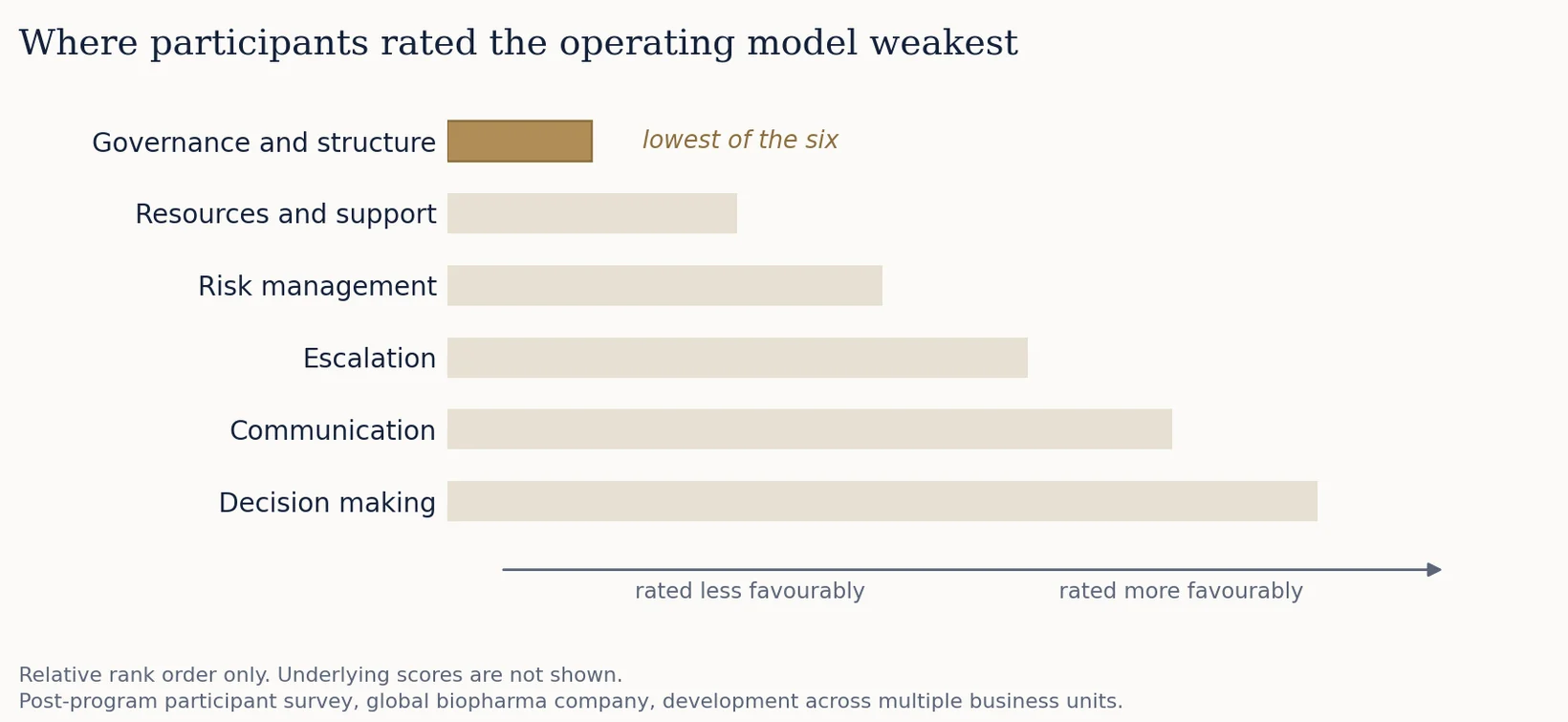
Exhibit 1. Relative rank order only. Underlying scores are not shown. Source: The Modeste Duncan Group analysis.
That is worth sitting with, because the program carried more governance than anything the organization had run before. Participants were not asking for additional oversight. Three findings recur in the free-text responses.
Nobody could reliably name who was ultimately accountable, who was providing direction, or who was making a given decision. Roles existed without clear mandate.
The structure carried too many layers, too many steering bodies and too many parallel teams, so information flow was neither smooth nor fast enough.
Some decisions were made late, others too fast, and some were made and then reversed, with the cost landing on operational staff as workload and stress.
Set against that, the same survey recorded that the cross-functional teams themselves were well run and constructive, that expert subteams functioned well, and that people willingly took on work outside their roles to get things done. The organization's capability was intact. What failed was the architecture around it.
3Three failure patterns
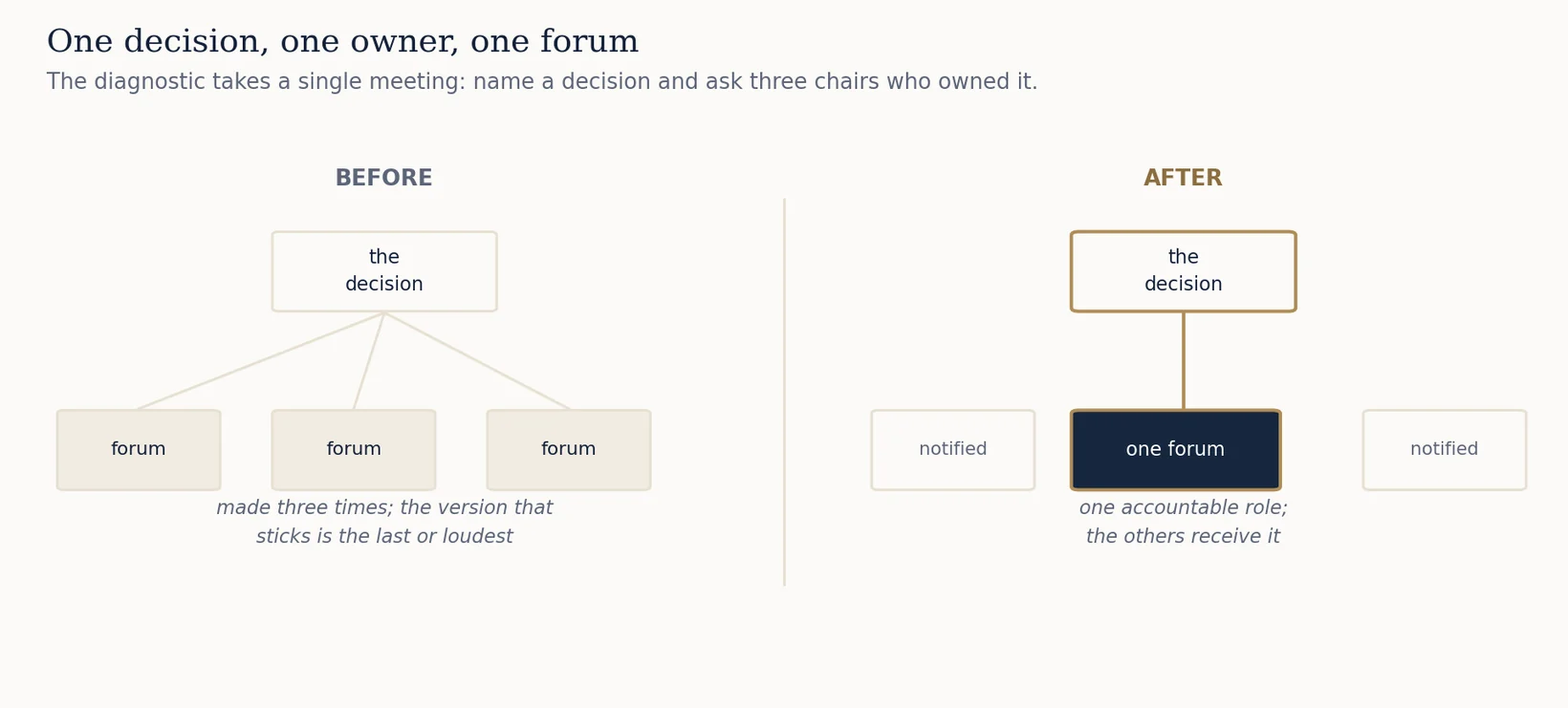
Exhibit 2. One decision made in three forums, and the same decision after. Source: The Modeste Duncan Group analysis.
Duplication
The same decision appears on several agendas, each forum believing it contributes input while another body decides. The decision gets made more than once and the version that sticks is whichever came last or loudest.
| Failure pattern | What you see | The diagnostic |
|---|---|---|
| Duplication | The same decision on three agendas | Name a decision from last quarter and ask three chairs who owned it |
| Consultation written as accountability | A matrix assigning four functions to one decision | Ask which function has ever blocked it |
| Escalation as default | Senior calendars full of two-levels-down questions | Ask the people escalating why they escalated |
Exhibit 3. Source: The Modeste Duncan Group analysis.
Exhibit. The three patterns and how to confirm each in one meeting.
The diagnostic takes one meeting. Name a decision made in the last quarter and ask three forum chairs who owned it. Divergent answers locate the problem immediately.
Accountability written as consultation, and consultation written as accountability
A responsibility matrix assigning four functions to a decision has assigned it to nobody. Consultation rights get written as decision rights because that is easier than telling a senior function its view is input.
A function that has never once blocked a decision was never deciding it.1 Saying so is a clarification of what was already true, and it lands better said plainly than implied.
Escalation as the default production mechanism
Where the first two persist, escalation becomes how the organization generates answers. The cost is not only senior time. Decisions migrate to people further from the evidence, working on thinner information under time pressure, and the organization learns to route around forums rather than through them.
4The Decision Inventory
A responsibility matrix assigns roles to activities. The Decision Inventory assigns decisions to forums, and the difference is not cosmetic. An activity has a doer. A decision has an owner, a trigger, an evidence requirement and a place where it is taken, and a matrix has no column for any of those.
Most efforts start by mapping the governance structure, which produces an accurate picture of the symptom.
Start with decisions instead, expressed as decisions. "Portfolio strategy" is a topic. These are decisions:
- whether a program passes a stage gate
- whether a clinical study synopsis and protocol are approved
- whether a master informed consent document is approved
- whether a specification or expiry is set
- whether a project that changes the manufacturing network proceeds
- whether labeling content is final
The distinction matters because a topic can be discussed in five forums without contradiction, while a decision made in five forums is a fault.
For each decision, record what triggers it, what evidence it requires, who is accountable, and which forum holds it. Accountability is one named role. Where the inventory cannot produce a single name, that is the finding.
This is the part that takes weeks rather than quarters. It is worth being honest that the analysis is the easy half.
5Classify every forum as deciding or advising
In the rebuild I ran, every enabling forum was classified into one of three types: cross-functional decision making, functional decision making, or advisory. Each classification was published, and each forum received a single-page charter carrying the same fields.
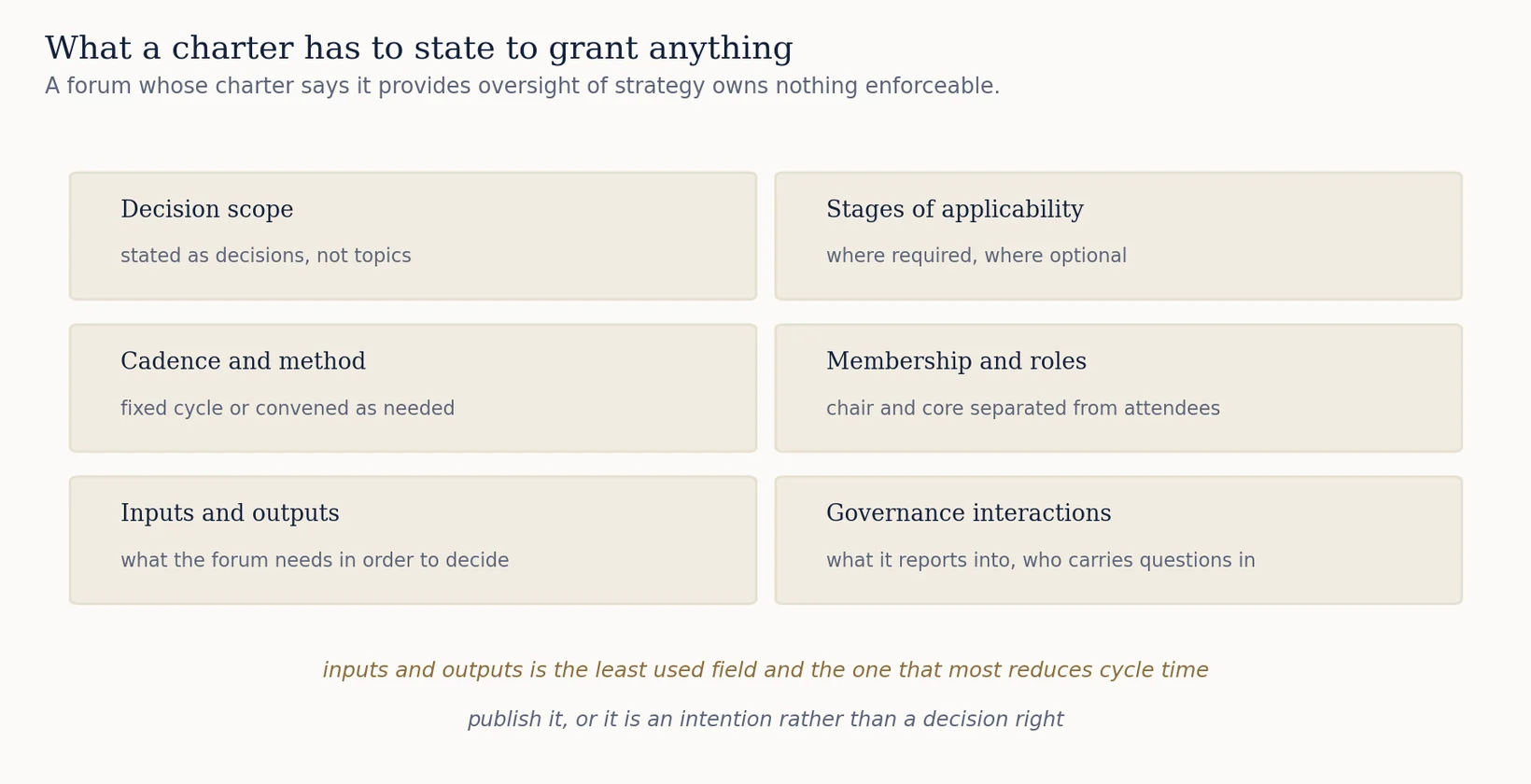
Exhibit 4. The six fields a forum charter has to carry. Source: The Modeste Duncan Group analysis.
Decision scope, stated as decisions
One forum approved passage through a specific stage gate. Another approved the clinical study synopsis, protocol and master informed consent form. Another approved specification and expiry. A charter saying a forum provides oversight of development strategy grants nothing enforceable.
Stages of applicability
Where the forum is required, distinguished from where it is optional. Without this, forums accumulate agenda items from stages they have no business in.
Cadence, duration and method
Some forums meet on a fixed cycle, others convene as needed. Both are legitimate and the difference has to be declared, because a team that cannot predict when a decision can be taken will build a workaround.
Membership and roles
Chair and core members separated from optional attendees. A forum where everyone present has equal standing has no decision owner.
Inputs and outputs
Specified in advance. This is the most under-used field and the one that most reduces cycle time. When a forum publishes what it needs in order to decide, teams arrive with it, and the meeting that used to end in a request for more information ends in a decision.
Governance interactions
Which body the forum reports into, and which team engages it. Each forum also had a named core-team member responsible for carrying questions in, which removes ambiguity about who owns the approach.
6The consent rule, and the carve-out regulated work requires
A general rule for consultation is that a function receives the evidence, provides a view inside a stated window, and silence lets the decision proceed. Without a rule of that kind, consultation becomes a veto held by whoever responds slowest.
That rule cannot apply uniformly in a regulated development organization, and writing it as though it can is how these frameworks lose credibility with quality and regulatory leaders.
Classification resolves it. Forums holding statutory approvals, or approvals relevant to good practice regulations (GxP), are decision-making forums and their approval is a positive act.23 Protocol and informed consent approval, specification and expiry setting, labeling content, and stage gate passage all sit there. Silence is not consent in any of them.
The time-bound consent rule applies to advisory consultation only, and the charter says which is which.
7Why it took two quarters
Here is the part most treatments of this subject leave out, and it determines whether the work holds.
I ran the rebuild in three phases: foundation reset, then functional and subteam clarity, then enabling forum clarity. Read as a project plan, that is a sequencing choice. Read correctly, it is three concession events, ordered so that each is smaller than the last and each is negotiated by people the previous phase has already brought inside.
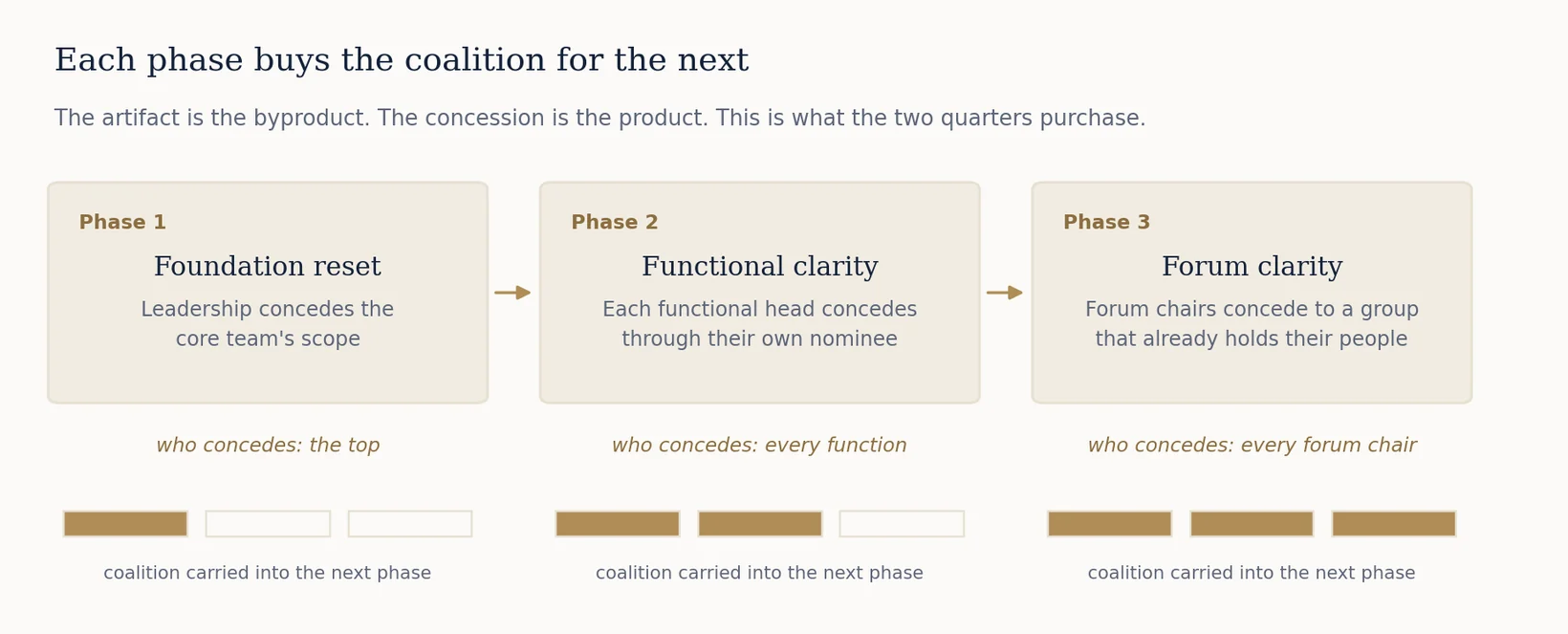
Exhibit 5. The artifact is the byproduct. The concession is the product. Source: The Modeste Duncan Group analysis.
Phase one concedes at the top
The core team's charter comes first: scope, remit, and an explicit statement of what falls outside it. Nothing below it can be negotiated until there is an agreed center. Starting elsewhere means asking functions to give up territory without being able to say what they are giving it up to.
Phase two concedes through the function's own person
This is the load-bearing design choice and it looks like an administrative detail. Each functional head was asked to nominate someone to the working group drafting the charter appendices, against three criteria: understands the business, holds decision-making authority, and models the organization's stated behaviors.
Those criteria are not a staffing preference. A nominee without decision authority produces a draft the functional head can disown. A nominee the function does not respect produces a draft the function ignores. Meeting all three means the function concedes to its own representative rather than to a central team, and a functional head who rejects that draft is rejecting their own nominee's work in front of their peers.
Phase three concedes to a room that is already yours
Forum chairs come last, and they negotiate with a cross-functional group that already contains their own functions' people from phase two. By this point a chair arguing to keep a decision is arguing against colleagues who have already given theirs up.
The two quarters purchase that arrangement. There is no analytical work in it at all.
Two mechanisms keep the time from becoming drift. Every phase ends in an approved artifact and a rollout rather than a recommendation, which is the difference between a change and a proposal. And each phase is time-boxed to a named date, because a working group without an end date becomes a standing committee, which is the failure this exercise exists to remove.
8The case for three weeks
The compressed version is real and it sometimes wins. Assemble the decision owners, run the inventory live, resolve contested items in the room, publish inside a month.
What it produces is compliance.5 Everyone in the room agrees, nobody has conceded anything they own, and the map decays within about two decision cycles, because under pressure people revert to the relationships they trust rather than the document they were shown.
That trade is worth making under specific conditions.
- A new leader inside their first hundred days. The mandate is at its widest and concession is expected rather than negotiated. This window closes and does not reopen.
- After a visible failure. A missed submission, a clinical hold, a program stopped for reasons everyone can name. The cost of the current arrangement is already agreed, which is the expensive part of the two-quarter version.
- Below roughly fifty people in development. Everyone who matters fits in the room, so the coalition and the meeting are the same thing.
- A greenfield structure. Nobody is conceding because nobody holds anything yet. Design it in three weeks and revisit at the third program.
- When escalation cost is already existential. A decaying map beats no map when the organization is missing dates now.
The rule I would apply: compress when the concession has already happened somewhere else. A new mandate, a public failure, or a small enough room each mean the giving-up is either unnecessary or already done. Where none of those holds, three weeks buys a document and two quarters buys a change.
There is an honest middle path for the common case where the diagnosis is urgent and none of the five conditions applies. Compress the inventory to weeks and publish it as findings rather than as a decision, then run the concession sequence at proper pace against a map everyone can already see. Visibility does some of the work that time would otherwise have to.
9When decision rights are the wrong intervention
This work fails, expensively, when the real problem is strategic rather than structural.
If an organization cannot say what it is trying to achieve, clarifying who decides makes the confusion legible and assigns names to it. Teams then execute contradictory directions faster and with more confidence, which is worse than the ambiguity that preceded it.
The diagnostic is short. Ask three functional heads what the organization's priority is for the next eighteen months. Convergent answers with divergent views on who decides is a decision-rights problem and this method applies. Divergent answers on the priority itself is a strategy problem wearing a governance costume, and no charter will touch it.
A second contraindication: where the conflict runs between two leaders rather than between two structures, the inventory becomes a proxy battlefield. That has to be settled directly, and before, rather than through a process.
10Installing it, and what decays
Announce the changes together. Rolling change makes each reduction in scope look like a targeted judgment about one function and invites negotiation.
Publish the inventory and the charters where anyone can read them. Decision rights held in a leadership deck are an intention. The value appears when a program manager can look up who owns a call and act on it.
Instrument three things. Escalation volume and the share of forum items ending in a decision both move within a quarter when the change is real. The third is the leading indicator and the most useful: pick a decision at random, ask a program manager two levels down who owns it, and time the answer. Hesitation shows the map decaying before either of the other measures moves.
Because it does decay. Two failure modes appear reliably.
Forums regrow
New problems arrive, new bodies get created to solve them, and nobody removes the old ones. Charters therefore carry an expiry date and a review cadence, and forums that no longer own a decision are closed rather than left dormant.
The map loses its owner
Someone has to hold it, and it should not be the person chairing the largest forum, because the owner of the map will eventually have to take a decision away from a forum, and that is difficult to do to yourself.
Conclusion
The technical output of this work is a set of one-page charters that could be drafted in a fortnight. Organizations holding those charters without the concessions behind them find the document ignored inside a quarter.
The two quarters are the intervention. Anyone proposing to compress them should be able to say which of the five conditions in section 8 applies, and what they intend to do when the map decays.
From practice. Nine forums, three phases, two quarters, and a survey afterward that rated governance lowest of the six categories measured. I ran that rebuild as head of portfolio and program management. The survey result is the part I did not expect and the part I have used ever since.
Appendix A · Abbreviations and Key Terms
| CRO | Contract research organization | ICF | Informed consent form |
|---|---|---|---|
| GCP | Good Clinical Practice | ICH | International Council for Harmonisation |
| GxP | Good practice quality regulations, collectively | RAPID | Recommend, Agree, Perform, Input, Decide |
Appendix B · References
Statutory and regulatory citations reflect settled United States law unless identified as draft. FDA and ICH documents were confirmed against primary sources as of April 2026. Draft guidances are identified as such and remain subject to change. ICH E6(R3) Annex 2 takes effect 15 January 2027; confirm its status before relying on the consent position in section 6. Citations were verified to September 2026; where a source postdates the paper, the later status is given.
1. Rogers, P. and Blenko, M.W. “Who Has the D? How Clear Decision Roles Enhance Organizational Performance.” Harvard Business Review, January 2006, 84(1), 52–61, 131. PMID 16447369. Origin of the RAPID framework.
2. International Council for Harmonisation. “ICH Harmonised Guideline: Guideline for Good Clinical Practice E6(R3).” Step 4 adopted 6 January 2025; effective in the European Union 23 July 2025; published by FDA 9 September 2025. Sections 10.1 to 10.3 (sponsor responsibility, agreements, oversight).
3. International Council for Harmonisation. “ICH E6(R3) Annex 2.” Step 4 reached 3 June 2026; CHMP adoption 25 June 2026; effective 15 January 2027.
4. Kahneman, D., Lovallo, D. and Sibony, O. “Before You Make That Big Decision.” Harvard Business Review, June 2011, 89(6), 50–60, 137. PMID 21714386.
5. Staw, B.M. “Knee-deep in the big muddy.” Organizational Behavior and Human Performance, June 1976, 16(1), 27–44. doi:10.1016/0030-5073(76)90005-2.
Published January 2026 by The Modeste Duncan Group, which owns this paper and the methods it describes. Clients receive a license to use them;
