
Executive Summary
A biopharma company held a long-term government supply contract. Its obligation period, the thing the contract existed to create, would not begin until a technical closeout report had been generated and accepted by the funder.
That report required regulatory approval of a supplement covering two fill-finish lines. The supplement could not be submitted until six months of stability data existed on a new container closure. The stability data required a process qualification run at the contract filler. The qualification run required bulk material already allocated to it, and that material was approaching the end of its shelf life.
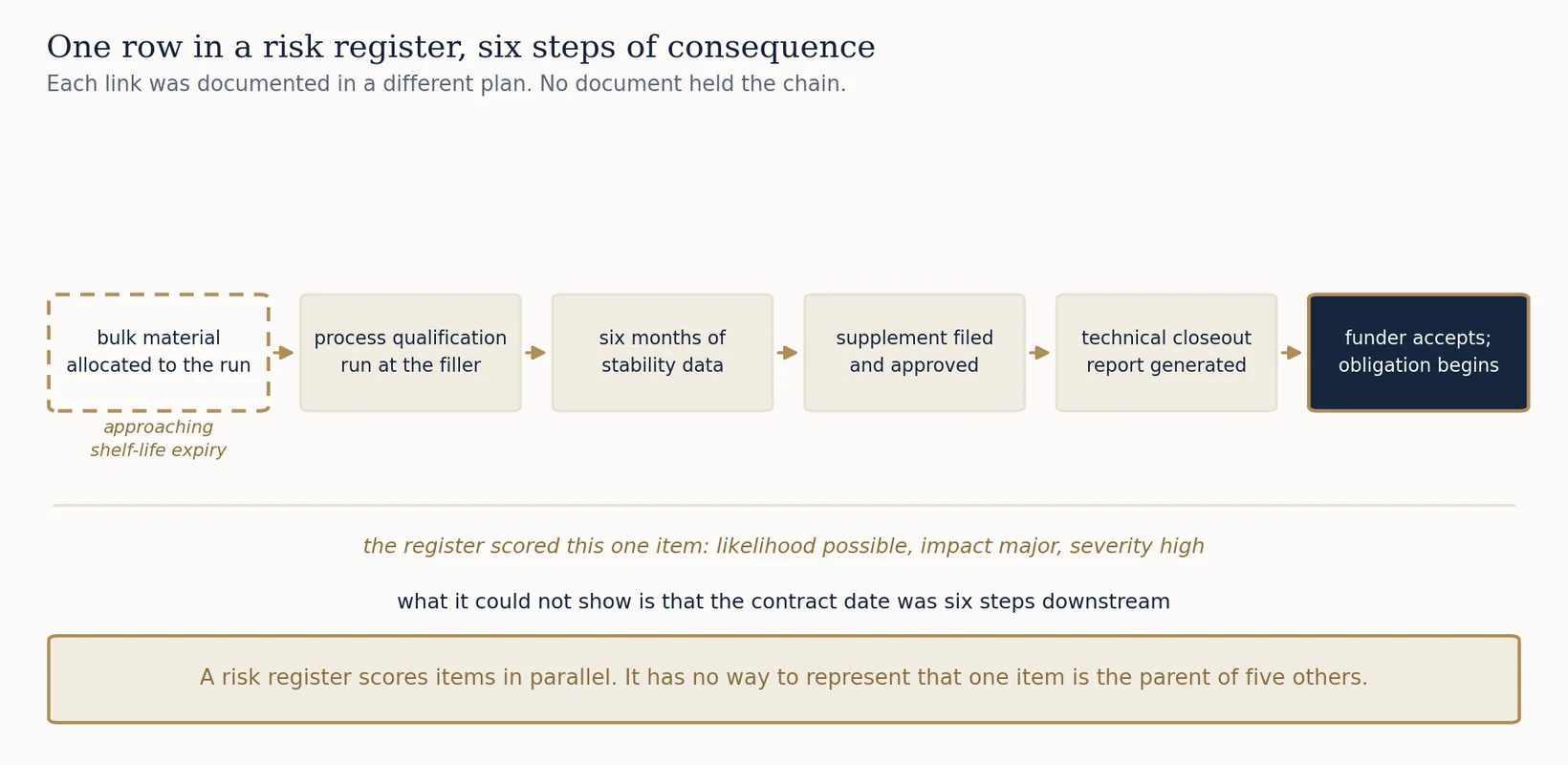
Exhibit 1. One documented row, and the six steps that depended on it. Source: The Modeste Duncan Group analysis.
The program's risk register carried the shelf-life item. Likelihood possible, impact major, severity high, with an owner and a mitigation. It was one row among many, scored the way every other row was scored.
What no document in the pack showed is that the contract obligation date sat six steps downstream of that one row. The register recorded that the material might expire. It did not record what expired with it.
I have seen the same shape in a clinical-stage company whose long-range plan assumed both lead programs would be partnered after their mid-stage readouts, with a partner funding the pivotal work. That assumption rested on comparable transactions and informed advice, which is the appropriate evidence for a position of that kind. When it was removed and pivotal costs were rebuilt with the function leads who would run the work, the cash on hand covered more than a year less of the plan than the board believed. Nothing had been overspent and no analysis was wrong.
Substitute your own version: a grant renewed, a payer accepting a price, comparability holding after a site transfer. The shape is the same.
Here is the problem in one sentence. A plan is sound when the evidence under each assumption is proportionate to the weight the plan puts on it, and most planning processes examine the evidence far more carefully than the weight.
Two properties determine whether an assumption is safe to build on.
The first is basis: the evidence supporting the assumption. Basis runs from direct observation through counterparty commitment, derived calculation, comparable precedent and expert judgment. Every function knows the basis of its own assumptions, and plans record it in a source line or a footnote.
The second is load: what else in the plan stops working if the assumption turns out to be wrong. Load is created by integration, so no single function sees it whole, and few planning documents record it.
Whether a given load is acceptable is a third question, and it belongs to the board. The same failure is a bad quarter at a company with two commercial products and the end of the runway at a company with none.
A plan is in proportion when the strength of the evidence rises with the weight being carried. It is out of proportion when something the company cannot absorb losing is resting on evidence that cannot be strengthened before the decision is taken.
This is not risk management. A risk register scores items in parallel on likelihood and impact. It lacks the concept of dependency. The preparedness register above did its job: it identified the shelf-life risk, scored it high, and assigned an owner. What it could not do, because no register can, is show that six other things were children of that one line.
The practical prize is specific. When a forum is given load alongside basis, the review that used to end in a request for more information ends in a decision. The reviewer can finally see which of the open questions has to be closed before committing.
1One Question, Stated Precisely
Ask a clinical operations lead how confident they are in an enrollment rate and the answer will be careful and qualified. They will name the feasibility work behind it, the sites that responded, and the range they would defend.
Ask a manufacturing lead about yield after transfer to a commercial site and the answer will be equally careful.
Both are giving basis competently. Neither is positioned to give load. The enrollment rate feeds a filing date, and the filing date feeds a partnering trigger. The yield sits beneath a supply commitment made to a funder. Those connections can be seen only from the integrated plan.
Load is created when the functions' work is integrated, and it is co-owned. Each function owns the piece of structure directly above and below its own work, and someone has to hold the view in which those pieces connect.
How good is this assumption is a question every function answers well about its own work. It is not the question that decides whether a plan is safe.
*Is the evidence under this assumption proportionate to the weight the plan puts on it?*
No function can answer it alone. The first half, the evidence, belongs to the function that made the assumption. The second half, the weight, is a fact about the plan as a whole.
Holding both halves is a specific accountability, and in most organizations it is unclaimed. Portfolio and program management holds the integrated plan and is the natural owner. In practice that function reports status where it could report structure. It can say what is late. Few organizations ask it what is load-bearing, or resource it to find out.
Part A · Two Properties, Held Apart
Three words carry the argument, and they are used consistently throughout.
- An assumption is a position the plan takes about something the company cannot yet know.
- Its basis is the evidence supporting it.
- Its load is how much of the rest of the plan stops working if it turns out to be wrong.
An assumption has a basis and carries a load. The two are independent, and treating a strong basis as proof that an assumption is safe to build on is what allows a well-constructed plan to fail.
A.1 Basis: the spectrum functions already know
Five levels cover most of a development plan.
- Observed. A measurement taken under described conditions. A titer from a released batch. An enrollment rate over two completed quarters.
- Committed. A counterparty has taken a position and can be held to it. Minutes recording an agreed endpoint. An executed supply agreement.
- Derived. A calculation on observed inputs under stated rules. Cost per batch at a defined scale. Both inputs and rules can be exhibited, so an error can be found.
- Comparable. Precedent from outside the program: deal terms in the modality, phase transition probabilities from published datasets, prices other assets have fetched. Comparable evidence holds when this program resembles the set it is compared to, which makes the choice of set the whole of the argument. A partnering assumption drawn from deals in the same modality at the same phase is a different claim from one drawn from a decade of deals across all modalities.
- Judged. The considered view of people who have done the work before, used where no study or counterparty can settle the question inside the decision window. A first-in-class enrollment rate with no precedent to draw on sits here. Judgment is often the only answer available, and it is the level at which two experienced people reach opposite conclusions from the same information.
What the spectrum orders is how readily an assumption can be checked before the event. An observation can be re-measured. A commitment can be tested by asking the counterparty. A comparison can be examined against its reference set, if the set is stated. A judgment can be challenged by other experienced people, and beyond that it is confirmed or refuted by the event itself.
Checkability is not accuracy. A judged assumption can be right where a measured one is misleading, and what separates them is what you can do about it in advance.
A.2 Load: created by integration, rarely recorded
Load is not the importance of an assumption in isolation. It is what sits downstream of it, and what those things in turn carry.
A fair objection is that dependency is already modeled. It often is. Schedules carry activity dependency and carry it well. Decision-tree valuations carry branch dependency. Correlated simulations carry statistical dependency between inputs.
Each of those models the uncertainties someone already recognized as uncertain. A partnering event modeled as a branch has been identified as a branch point by whoever built the tree, and it is being handled. The assumptions that bring plans down are the ones that entered the plan as settled and were never nominated for modeling. The shelf-life line was in the risk register, so it was recognized. It was not in the schedule as the predecessor of a contract date, because nobody had drawn that line.
The gap is between what a plan treats as uncertain and what it actually rests on.
A.3 The same plan, on both axes
| Assumption in the plan | Domain | Basis | Load if wrong |
|---|---|---|---|
| Mechanism corrects the defect in target tissue | Science | Observed: completed non-clinical package | Program ends |
| Primary endpoint is acceptable to the agency | Regulation | Committed: end-of-phase-2 minutes | Pivotal design reopens |
| Long-term follow-up runs fifteen years | Regulation | Committed: applicable guidance | Cost line only |
| Drug substance cost at commercial scale | Capital | Derived: unit costs, defined batch size | Margin, not viability |
| Yield holds after transfer to commercial site | Science | Comparable: engineering runs at current site | Supply timing, one workstream |
| Diagnosed, eligible patients per year | Patient | Derived: published prevalence, stated diagnosis rate | Forecast, not feasibility |
| Sites identify patients fast enough to enroll | Patient | Judged: feasibility questionnaire responses | Timeline and burn |
| A partner funds the pivotal program | Capital | Comparable: transactions in the modality, bank advice | Pivotal program does not happen |
| Priority review voucher realized at modeled value | Capital | Comparable: historic voucher sale prices | Return falls, program continues |
| Team staffed to run two pivotal studies | Leadership | Judged: organizational design | Execution, recoverable with time |
Exhibit 2. Source: The Modeste Duncan Group analysis.
Read the basis column alone and the plan looks well constructed, because it is. Read the load column alone and everything looks consequential. Read them together and two assumptions sit at the same basis level for the same reason. The voucher line rests on what other vouchers sold for. The partnering line rests on what other deals in the modality looked like. In both cases the evidence comes from outside the program, neither is something measured about this program, and neither is something a counterparty has agreed to. Both would be shown wrong by the same event: this program turning out to be unlike the set it was compared to.
Their loads are nothing alike. One carries a line in the return calculation. The other carries whether the pivotal program happens at all.
A third assumption also rests on comparable evidence, that yield holds after transfer to the commercial site. It sits in the significant band, because a yield shortfall delays supply without ending the program. It belongs on the watch list with a trigger and a date, and not in the same conversation as the partnering line. Comparable evidence is not a flag in itself, and treating every comparable-based assumption as a problem produces a list nobody can act on.
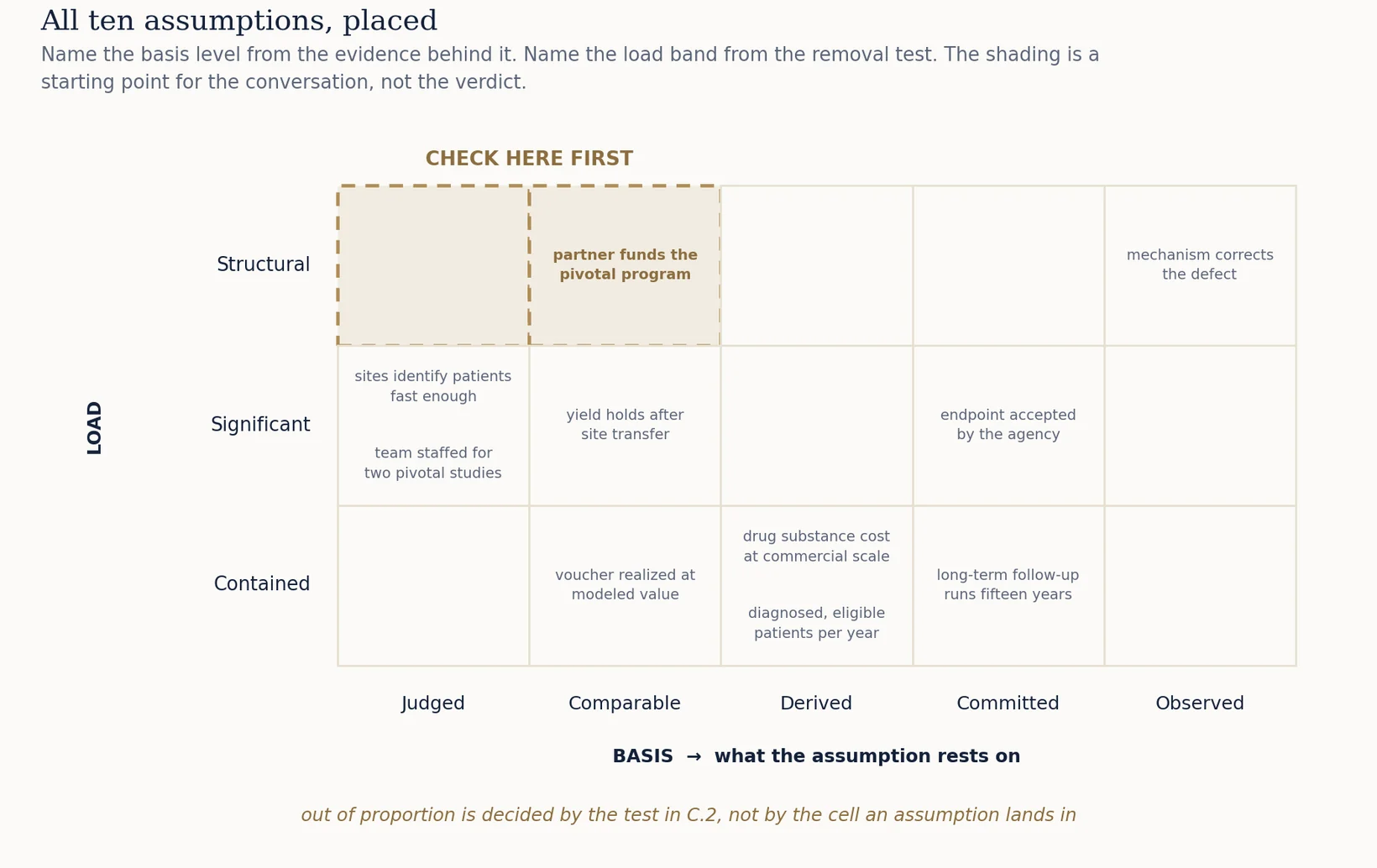
Exhibit 3. All ten assumptions from the table, placed on both properties. Source: The Modeste Duncan Group analysis.
The grid is a summary. Underneath each placement is a chain like the one in the executive summary, and the chain is the real object.
A.4 Regulation already applies proportionality
Quality risk management directs sponsors to evaluate risk on severity of harm and probability of occurrence, with effort proportionate to the level of risk.110
Clinical study design guidance names the concept directly. Critical to quality factors are those attributes whose integrity is fundamental to participant protection and to the reliability and interpretability of results. Sponsors are directed to identify them prospectively and concentrate effort there.29
Both apply proportionality inside a study, and the same reasoning governs a manufacturing process and a submission.910 What has been applied to studies, processes and submissions has not been applied to the plan that contains them all.
Part B · Why Load Stays Invisible
B.1 The framing is where the structure is visible
While a plan is being built, in the function conversations and the model construction, dependency is visible to the people doing it. Somebody knew the closeout report waited on the supplement, and somebody knew the supplement waited on stability data.
The version that reaches a leadership team is the finished one: a runway, a risk-adjusted valuation, a timeline, a register of scored risks. Everything structural is behind it.
B.2 Aggregation preserves basis and removes load
Basis survives integration as sensitivity ranges, because uncertainty is a property of an input and propagates arithmetically. Load does not survive, because load is a property of the dependency structure and the arithmetic flattens it into a single output.
Published phase transition estimates, drawn from over four hundred thousand trial entries covering more than twenty-one thousand compounds, are comparable-class evidence about a population of programs.35 Applying them to one asset is standard and often the best option available. The band around the result expresses spread in the reference class. It says nothing about how much of the plan collapses if this asset behaves differently.
B.3 The tension that cannot be dodged
A team that states plainly that its pivotal program depends on an unsigned partnership invites deferral and a repeat review. The same team presenting a funded path gets a decision.
Nobody here is being dishonest, and that is why the problem persists. A dishonest team can be caught. A rational team responding to the incentives in front of it will keep producing the same omission indefinitely, from good people.14 Structural incentives outlast individuals, so the correction has to be structural too.
Two consequences follow, and both are governance. Load has to be required by the forum. A team will not volunteer it. And the forum has to be willing to take a meaningful decision when a team declares an out-of-proportion assumption. A forum that treats disclosure as a reason to defer will stop being told.
Part C · The Removal Test
C.1 Work the plan without the assumption
Basis is assessed by the function that owns the assumption. Load is established by working through the plan, which is why it falls to whoever holds the integrated view.
Ask what stops working if the assumption turns out to be wrong. Two disciplines make the answer usable.
Test the realistic adverse case, not the catastrophic one. The question is not whether a partner ever appears. It is whether one appears on the timeline the plan requires. For the preparedness chain, the question was not whether bulk material could ever be made again. It was whether it could be made, released and qualified before the contract date the whole program was built toward.
Follow the chain to its end rather than stopping at the first casualty. The shelf-life risk looks like a manufacturing problem for exactly one step. Two steps on it is a filing date, and six steps on it is the start of a contractual obligation.
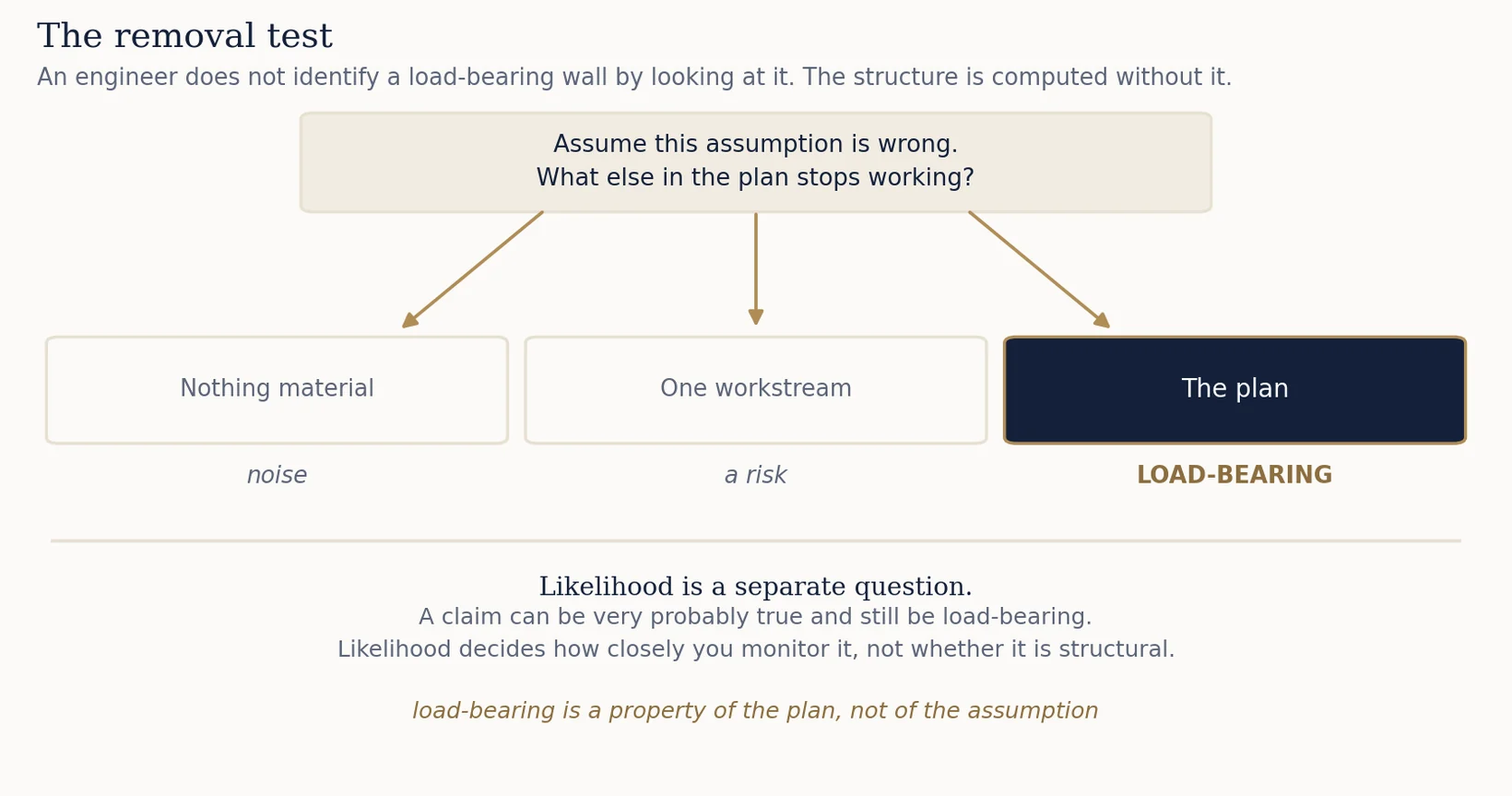
Exhibit 4. The removal test, and why likelihood is a separate question. Source: The Modeste Duncan Group analysis.
Applied to the ten assumptions in the table, the test separates ones the basis column had made look equivalent. Remove the voucher and the return falls, and nothing else changes. Remove the enrollment rate and the timeline extends, costs rise, and the cash on hand covers less of what remains. Remove the partner and there is no pivotal program on the current balance sheet.
Three properties make the test operational.
- It is answerable. Owners can say what depends on their assumption once someone shows them the dependency, because it is a fact about the plan.
- It is independent of likelihood. Partnering happens, and in most plans that assumption is more likely right than wrong. Whether the plan survives its being wrong is a separate question.
- It produces a short list. In the plans I have worked, three or four assumptions out of forty or fifty carry structural load. If the list runs to fifteen, the test has been applied too loosely.
Likelihood is not discarded. Basis already carries most of it, and beyond that likelihood sets how closely a structural assumption is watched: the earlier trigger date, the tighter check. What likelihood does not do is move an assumption out of the structural band. A one-in-ten chance of losing the pivotal program still puts the pivotal program at stake.
C.2 What makes an assumption out of proportion
The grid shades one corner as a prompt. The verdict comes from the test below. Structural load resting on judgment or precedent is where exposure concentrates most often, so it is where a team should look first. Treating it as the definition produces two errors: flagging assumptions that are fine and missing ones that are not.
Three questions decide it, in order.
- What fails if this is wrong? That is the removal test, and it gives the load band.
- Can the organization absorb that? Appetite is set by the board and the balance sheet, and the same failure is absorbable at one company and terminal at another.
- Can the evidence be strengthened before we commit, and at what cost? A comparable-based assumption that becomes committed with a two-week negotiation is a different proposition from one requiring a study nobody can fund.
An assumption is out of proportion when the consequence of its being wrong exceeds what the organization has agreed it can absorb, and the evidence cannot be raised to match inside the decision window.
Both halves matter. Consequence alone flags too much, because plans are full of assumptions with serious consequences the company has knowingly accepted. Weak evidence alone flags too much for the reason given above.
Three consequences follow that the grid alone would hide. A committed assumption can be out of proportion, when the counterparty may not survive the year, and the response is a second source rather than comfort in the signature. A significant-band assumption can be out of proportion at a company with no reserve. And an assumption in the shaded corner can be entirely in proportion, if the company holds cash to fund the program alone.
C.3 Load is a property of the plan
The partnering assumption carries the pivotal program where the runway ends before that program does. In a plan financed through approval, the identical assumption with the identical basis carries only an upside case.
So a load assessment cannot be made once and filed: a financing event, a scope reduction or a schedule shift moves load onto assumptions nobody revised. And it cannot be delegated to the function that owns the assumption, which knows its evidence and not the structure above it.
C.4 When the mismatch cannot be closed
Some can be corrected before committing. Others cannot, because the term sheet will not exist in time or the financing is not available on acceptable terms. That is common, and it changes what the method is for.
Carrying a mismatch deliberately means three things that carrying it unknowingly does not.
First, the exposure is named in the approval, so the board has accepted it explicitly instead of inheriting it.
Second, a trigger is set: the observable event that will tell you the assumption is failing, and the date by which it should have occurred. For a partnering assumption the trigger is not the signature. It is the point at which no counterparty has entered confirmatory diligence, which is visible months before a deal would close. For the supply chain above it was the release date of the allocated material, which was visible against the shelf-life expiry from the moment both were written down.
Third, a response to the trigger is agreed upon before the pressure arrives. What the company does if the trigger fires, decided in advance, because the same decision taken afterward will be taken by people defending a position.
Part D · A Constructive Proposal
D.1 The Load Map
A table of assumptions with columns is a register, and registers get built once and left alone. The Load Map is three things held together, and the third is what keeps it alive.
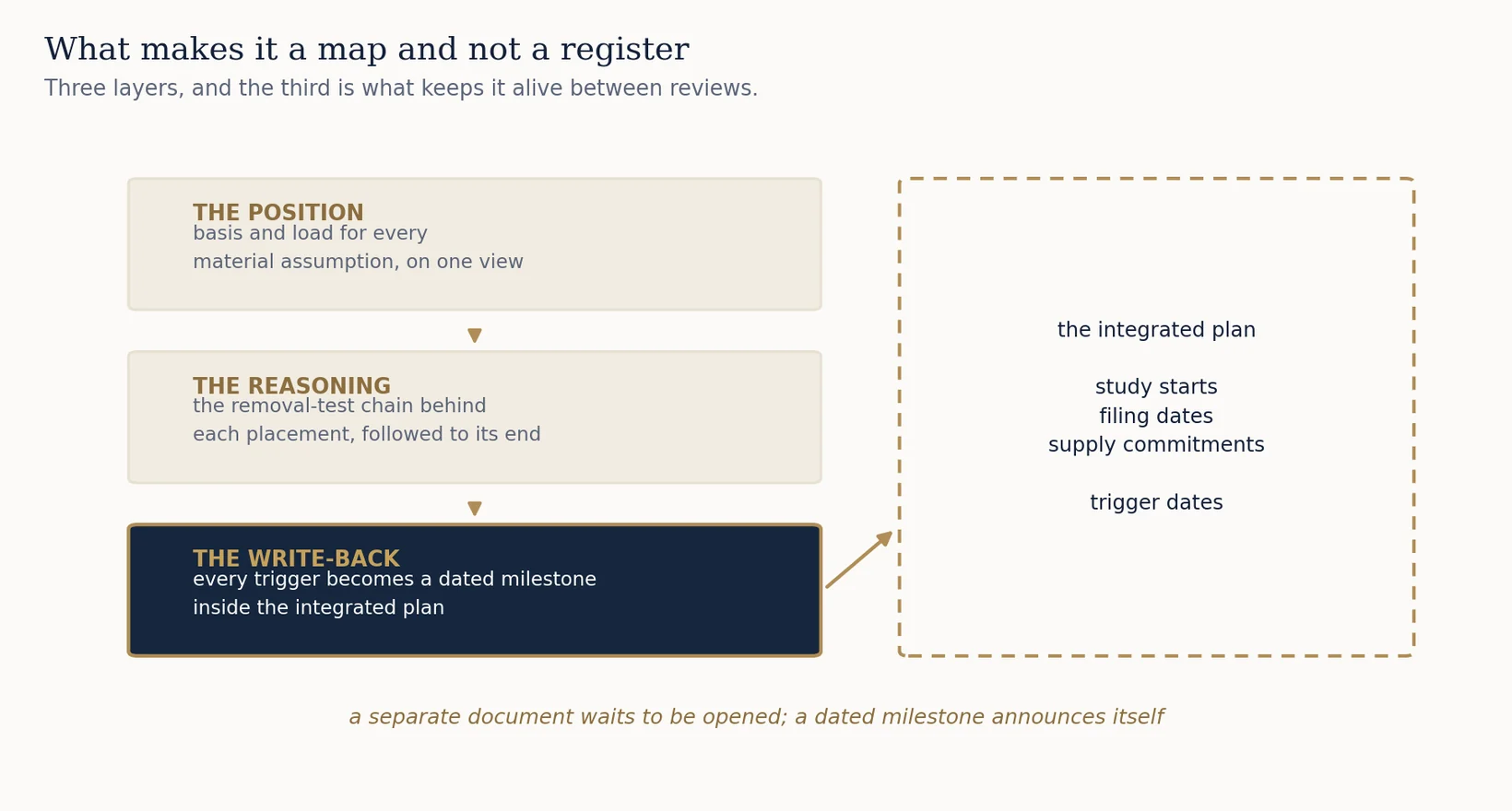
Exhibit 5. The three layers of the Load Map, and where the triggers go. Source: The Modeste Duncan Group analysis.
It carries the position
The basis and load grid is the map's front page. It shows, on one view, where every material assumption sits and which ones need a decision. A leadership team reads its exposure in a glance instead of reading forty rows.
It carries the reasoning
Behind each placement sits the removal test chain: what was assumed wrong, and what stopped working, step by step to the end. That is the working that produced the position, and it is what a new chief executive, a new board member or a diligence team needs in order to trust the picture.
It writes back into the plan
This is what separates it from a register. Every trigger the map sets becomes a dated item in the integrated plan itself, alongside the study starts and the filing dates. The date allocated material must be released is a milestone. The point at which no counterparty has entered diligence is a milestone. They sit on the critical path with everything else, owned by a named person, reviewed in the same forum on the same cadence.
A separate document depends on someone remembering to open it. A dated milestone inside the plan announces itself.
For each assumption the removal test found structural, the map records seven fields.
- The assumption, as the plan states it
- The function that owns it
- Its basis: observed, committed, derived, comparable or judged
- What fails if it is wrong, followed to the end of the chain
- The action that would bring it into proportion, with cost and duration
- The trigger that would show it failing
- The date that trigger is checked, carried into the plan as a milestone
The integrated effect is the point. Examined alone, each assumption produces a reasonable answer and no action. Examined together against the structure they hold up, they produce a short ranked list: what closes before committing, what is monitored on a date, and what the company has agreed to carry.
D.2 The two questions that populate it
Ask both questions of each function individually first, then of the group together. The individual sessions produce basis. The group session produces dependency, because that is where one function hears what another is assuming and recognizes its own work sitting on top of it.
The gap between the two sets of answers is itself a finding. An assumption described confidently alone and hedged in front of peers is one where the confidence was contextual.415
What impact do you want to have?
Asked first, because load is defined relative to a destination. Without a stated outcome there is no structure for anything to hold up and the Load Map becomes a list.
What would have to be true?
Asked of each domain. Individually, the answer is the evidence a function would produce if challenged. In the group, the same question surfaces what the rest of the plan has quietly built on top of that evidence.
D.3 What it would take to institutionalize
Three conditions, none of them analytical.
The forum requires the Load Map as an input.1213 Evidence requirements specified in advance are the most effective governance device available, because teams arrive with what is required.
The forum decides in the presence of declared out-of-proportion assumptions, and demonstrates it. Deferral is sometimes the right call, and a forum should say so when a team has not worked the options. The distinction that has to hold is between deferring because the work is incomplete and deferring because the exposure was disclosed. The second teaches a team to stop disclosing, and it is the more expensive of the two.78
And the Load Map is maintained by whoever holds the integrated plan, with each function accountable for its own entries, because load is created at the joins and read from the whole.611
2Conclusion
Return to the supply contract. Every step in that chain was documented. The obligation date was in the contract, the approval timing was in the regulatory plan, the stability requirement was in the CMC plan, and the shelf-life risk was in the register with an owner and a mitigation. Nothing was hidden and nobody was careless.
What did not exist anywhere was a single line connecting the material expiry date to the contract date. Six documents each held one link. No document held the chain.
The practice will have arrived when a plan reaches a forum with its out-of-proportion assumptions already named, each carrying a trigger and a written response, and when the team that names them is rewarded with a decision.
**From practice. I traced the first, a supply contract whose obligation date sat six steps downstream of a material shelf life, while running portfolio and program management for a global development organization. I rebuilt the second, a long-range plan resting on a partnering assumption, with the function leads as chief strategy officer of a clinical-stage company. Across nearly thirty years I have carried executive accountability for programs and portfolios cumulatively exceeding \$7 billion, the first approved self-amplifying mRNA vaccine, and partnerships spanning public funders, sovereign governments and industry.**
Appendix A · Abbreviations and Key Terms
| CMC | Chemistry, manufacturing and controls | IND | Investigational New Drug application |
|---|---|---|---|
| CTQ | Critical to quality factor | NPV | Net present value |
| ICH | International Council for Harmonisation | QRM | Quality risk management |
Appendix B · References
Statutory and regulatory citations reflect settled United States law unless identified as draft. FDA and ICH documents were confirmed against primary sources as of July 2026. Draft guidances are identified as such and remain subject to change. Citations were verified to September 2026; where a source postdates the paper, the later status is given.
1. International Council for Harmonisation. “ICH Q9(R1): Quality Risk Management.” Step 4 adopted 18 January 2023; FDA final guidance May 2023; EMA effective 26 July 2023. Risk evaluation on severity of harm and probability of occurrence, with effort proportionate to the level of risk.
2. International Council for Harmonisation. “ICH E8(R1): General Considerations for Clinical Studies.” Adopted at Step 4 in 2021. Critical to quality factors: attributes whose integrity is fundamental to participant protection and to the reliability and interpretability of results.
3. Wong, C.H., Siah, K.W. and Lo, A.W. “Estimation of clinical trial success rates and related parameters.” Biostatistics, April 2019, 20(2), 273–286. doi:10.1093/biostatistics/kxx069. PMID 29394327. Drawn from 406,038 clinical trial entries covering 21,143 compounds, January 2000 to October 2015. Corrigendum at 20(2), 366.
4. Kahneman, D., Lovallo, D. and Sibony, O. “Before You Make That Big Decision.” Harvard Business Review, June 2011, 89(6), 50–60, 137. PMID 21714386. A checklist directed at the process behind a recommendation rather than its content.
5. Paul, S.M., Mytelka, D.S., Dunwiddie, C.T., Persinger, C.C., Munos, B.H., Lindborg, S.R. and Schacht, A.L. “How to improve R&D productivity: the pharmaceutical industry’s grand challenge.” Nature Reviews Drug Discovery, March 2010, 9(3), 203–214. doi:10.1038/nrd3078.
6. Rogers, P. and Blenko, M.W. “Who Has the D? How Clear Decision Roles Enhance Organizational Performance.” Harvard Business Review, January 2006, 84(1), 52–61, 131. PMID 16447369.
7. Staw, B.M. “Knee-deep in the big muddy: a study of escalating commitment to a chosen course of action.” Organizational Behavior and Human Performance, June 1976, 16(1), 27–44. doi:10.1016/0030-5073(76)90005-2.
8. Sleesman, D.J., Conlon, D.E., McNamara, G. and Miles, J.E. “Cleaning up the big muddy: a meta-analytic review of the determinants of escalation of commitment.” Academy of Management Journal, 2012, 55(3), 541–562. The meta-analysis, and the stronger citation of the two when arguing this point with a board.
9. International Council for Harmonisation. “ICH Q8(R2): Pharmaceutical Development.” Critical quality attributes and design space: the principle that development effort concentrates where product quality is determined.
10. International Council for Harmonisation. “ICH Q10: Pharmaceutical Quality System.” Management responsibility and the requirement that oversight is proportionate to risk.
11. International Council for Harmonisation. “ICH Harmonised Guideline: Guideline for Good Clinical Practice E6(R3).” Step 4 adopted 6 January 2025; effective in the European Union 23 July 2025; published by FDA 9 September 2025. Sections 10.1 to 10.3 on sponsor responsibility, agreements and oversight where activities are transferred.
12. 21 C.F.R. §312.23(a)(3). The IND introductory statement and general investigational plan require the sponsor to state the rationale for the drug and the study, the indications, the general approach, the kinds of trials planned for the coming year, estimated patient numbers, and any anticipated risks of particular severity.
13. U.S. Food and Drug Administration. “Best Practices for Communication Between IND Sponsors and FDA During Drug Development; Guidance for Industry and Review Staff.” On the timing and content of sponsor communication where a development assumption changes.
14. Bower, J.L. and Gilbert, C.G. “How Managers’ Everyday Decisions Create or Destroy Your Company’s Strategy.” Harvard Business Review, February 2007, 85(2), 72–79, 154. PMID 17345681. On resource allocation as the mechanism by which stated strategy and actual commitment diverge.
15. Lovallo, D. and Sibony, O. “The case for behavioral strategy.” McKinsey Quarterly, March 2010, No. 2, 30–43. On process-level interventions in strategic decisions, and why individual debiasing is insufficient.
Published December 2025 by The Modeste Duncan Group, which owns this paper and the methods it describes. Clients receive a license to use them;
